You spent money on Facebook ads. The leads came in. Your form notifications are sitting in your inbox. So why aren’t those leads turning into customers? Sometimes, the problem isn’t your ads. It’s what happens after someone fills out the form. A great Facebook lead is only valuable if someone actually follows up with it.
Getting the Lead Is Only Step One
Facebook Lead Ads make it incredibly easy for potential customers to raise their hand. They can submit their information without leaving Facebook, reducing friction and making it easier for businesses to generate leads.
Generating a lead and converting a lead are two very different things. If someone submits a form at 10:00 a.m. and doesn’t hear from your business until the next afternoon, there’s a good chance they’ve already moved on.
They may have contacted a competitor. They may have forgotten they filled out the form. Or they may simply assume your business isn’t interested.
Your ad did its job. Your follow-up didn’t.
Speed Matters More Than You Think
When someone submits a lead form, they’re telling you they are interested right now.
That doesn’t necessarily mean they’re ready to buy immediately. But it does mean they’re actively considering a solution.
The longer you wait to respond, the colder that lead becomes. That’s why businesses running Facebook Lead Ads should have a clear process for what happens immediately after a form submission.
That could include:
- An immediate text or email confirmation
- A phone call from your team
- Automated follow-up messages
- A CRM notification
- A scheduled appointment
- Multiple follow-up attempts over several days
The exact process will depend on your business, but the important thing is to have one.
“We Called Once” Isn’t a Follow-Up Strategy
One of the biggest mistakes businesses make is treating a missed call as a dead lead. Someone doesn’t answer? Try again. Still nothing? Follow up later. Send a text. Send an email. Leave a voicemail. Not every lead will respond to the first attempt, and that’s normal. People are working. They’re driving. They’re with their kids. They’re comparing options. They may have filled out your form while they had five minutes of free time and then completely forgotten about it. Following up isn’t being pushy. It’s giving an interested person another opportunity to connect.
Your Leads Need Context
There’s another reason follow-up matters: your sales team needs to know where the lead came from. If someone submits a Facebook form asking for a roofing inspection, for example, your team shouldn’t have to start the conversation from scratch. The lead’s information, the service they requested, and any relevant questions from the form should be available to whoever follows up. That creates a better customer experience and makes the conversation more productive.
Instead of: “So… what are you looking for?” Your team can start with: “Hi, you recently requested information about a roof inspection through Facebook. I wanted to see how we can help.” That’s a very different conversation.
Don’t Blame Facebook for a Broken Sales Process
It’s easy to look at a spreadsheet and say: “We got 100 leads, but only two customers. Facebook isn’t working.” But that’s not enough information to make that conclusion.
You need to know:
- How quickly were those leads contacted?
- How many times was each lead contacted?
- Were calls, texts, and emails used?
- How many leads actually answered?
- How many qualified leads were there?
- How many appointments were scheduled?
- How many appointments actually happened?
- How many became customers?
- How much revenue came from those customers?
Without that information, you’re only looking at the top of the funnel, and that’s not where revenue is created.
Lead Quality Still Matters
Of course, follow-up isn’t the answer to everything. If your ads are attracting the wrong people, no amount of follow-up will turn every lead into a customer. That’s why your Facebook campaign, targeting, creative, offer, lead form, and follow-up process all need to work together. A campaign generating 200 irrelevant leads isn’t better than one generating 50 qualified leads.
Quality matters, but businesses should make sure they’ve actually given their leads a chance before deciding the campaign isn’t working.
What Happens After Someone Clicks “Submit”?
That’s the question every business running Facebook Lead Ads should be able to answer.
Not eventually, not “our sales team gets a notification,” immediately. A strong lead-generation system should have a defined path from:
Ad → Lead → Follow-Up → Conversation → Appointment → Customer
If there’s a gap between any of those steps, you’re potentially leaving money on the table.
Sometimes, the biggest opportunity isn’t getting more leads. It’s doing more with the leads you’re already paying for.
Facebook advertising can put your business in front of the right people and generate new opportunities, but an ad can’t answer the phone for you. It can’t send the follow-up text, schedule the appointment, or close the sale. That’s your job. So, before increasing your ad budget because you think you “need more leads,” take a look at what happens after the lead comes in.
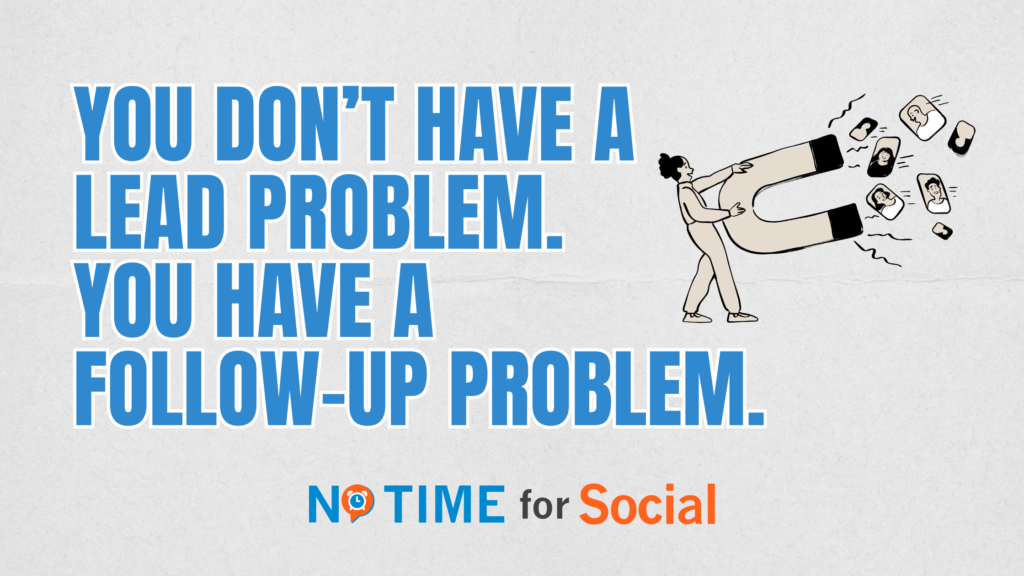
You might not have a lead problem. You might have a follow-up problem. Fixing that could be worth far more than simply buying more leads.
At No Time for Social, we help businesses throughout Round Rock and Central Texas build marketing strategies that don’t just generate leads; they help turn those leads into customers. From Facebook lead generation to follow-up strategies, we can help you create a system that reaches the right audience, captures high-quality leads, and equips your sales team with the tools to convert them. Ready to stop leaving leads on the table? Visit notimeforsocial.com/contact or call/text 512-721-0333 to get started.